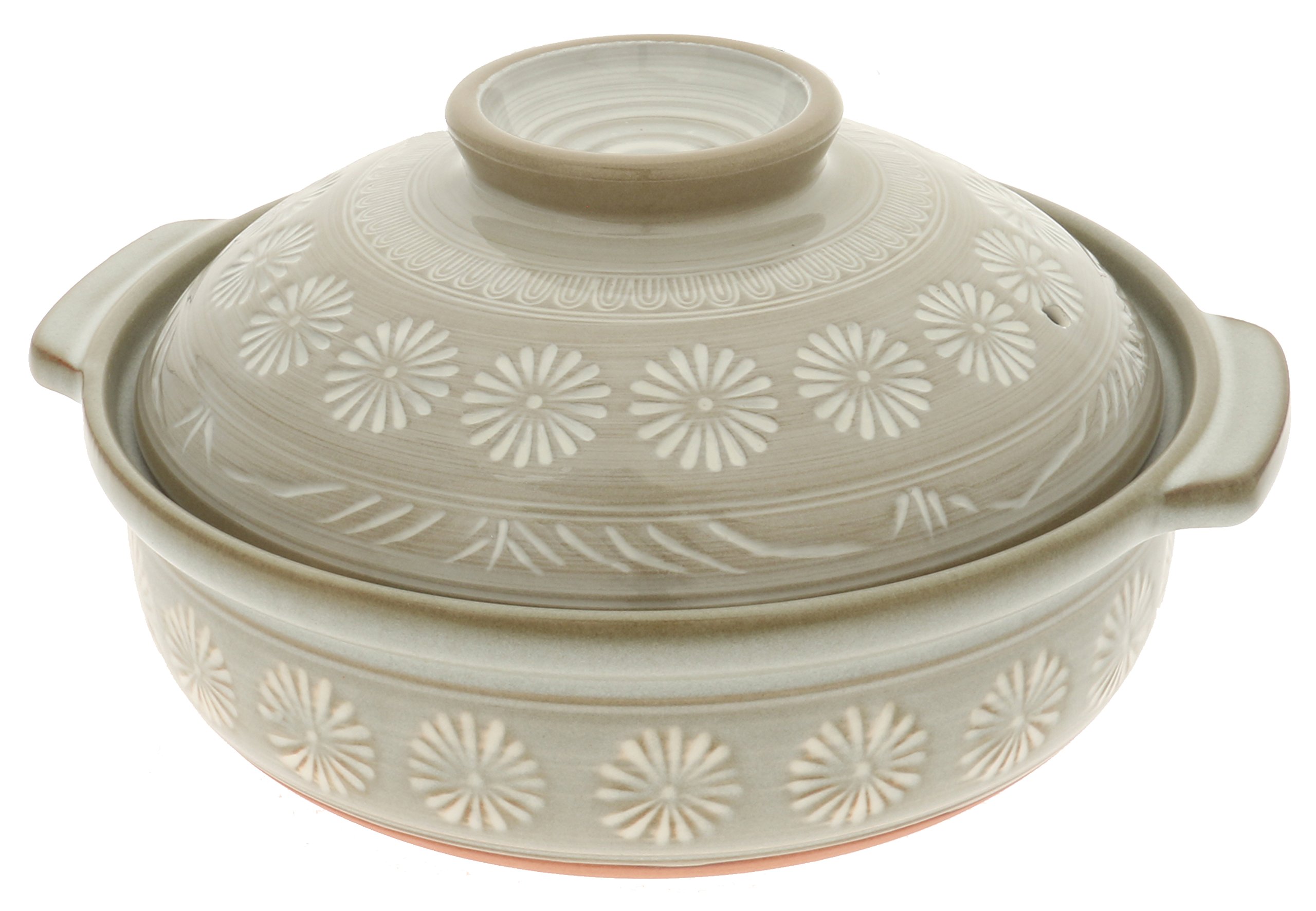
Nabe (pronounced “nah-beh”) is the Japanese word for both the pot and the one-pot cooking style that turns simple, brothy ingredients — vegetables, tofu, seafood, thinly sliced meat — into a deeply satisfying shared meal. Think of it as Japan’s answer to fondue or a French pot-au-feu: everything simmers together at the table, and guests serve themselves as the meal progresses. The base of nearly every nabe dish is dashi (dah-shee), a light, umami-rich broth made from dried kombu seaweed and bonito flakes that takes about 20 minutes to prepare and tastes nothing like anything from a carton. If you’ve never cooked Japanese food at home but have eaten it in restaurants, dashi is the quiet flavor behind almost everything you loved. This guide walks you through the physical setup — specifically the donabe, the traditional clay pot — plus the pantry decisions and broth choices that will make your first nabe night feel less like a cooking project and more like a ritual.
| EDITOR'S PICK[Japanese Hana Mishima Donabe Ce…](https://www.amazon.com/dp/B08GXYJ4TV?tag=greenflower20-20) | Mid-tier[Kotobuki Donabe Japanese Hot Pot](https://www.amazon.com/dp/B01GCM2LSS?tag=greenflower20-20) | Budget pick[[Genuine Product] 21081 Banko W…](https://www.amazon.com/dp/B0CM8JBD94?tag=greenflower20-20) | |
|---|---|---|---|
| Capacity | 50 fl oz | — | — |
| Diameter | 8.5" | — | — |
| Material | Banko earthenware | — | Banko ware |
| Serving size | — | — | 2-3 people |
| Made in Japan | ✓ | — | ✓ |
| Price | $99.95 | $67.99 | $55.00 |
| See on Amazon → | See on Amazon → | See on Amazon → |
The Donabe Decision: Clay vs. Cast Iron vs. Ceramic-Coated
The word donabe literally means “clay pot” (do = clay, nabe = pot). A true donabe is made from porous Iga clay — most famously from Iga-Ueno in Mie Prefecture — fired at relatively low temperatures, which gives it a rough, sandy texture and an ability to retain heat long after you move it off the flame. That retained heat is the whole point: the pot keeps your broth at a gentle simmer while everyone eats, without scorching the bottom.
Here’s where practitioners often second-guess themselves: do you actually need a clay donabe, or will cast iron or enameled cast iron work just as well?
The honest answer is that it depends on how you’re cooking.
A traditional clay donabe (the Nagatani-en Iga-yaki line is the benchmark that Toiro Life’s product reviews repeatedly return to as a reference point) brings authentic thermal behavior: slow, even heat uptake and long hold times. Owners consistently report that the clay imparts a subtle minerality to broth over time, and that the pot becomes more seasoned and less porous with use — almost like a cast-iron skillet. The tradeoff is fragility. Clay donabe cannot go over high electric coil burners without a heat diffuser; they’re not induction-compatible unless you buy a model specifically rated for it; and a thermal shock — cold pot onto a hot burner — can crack them. You need to cure a new clay donabe before first use (more on that below).
Cast-iron or enameled cast-iron pots (Vermicular’s Oven Pot and the Staub Cocotte are both used by Japanese home cooks as nabe vessels when the primary use case is heavy braises or oden — the long-simmered winter stew) work beautifully for nabe if you already own one. Induction compatible, essentially indestructible, and easier to clean. The tradeoff: they’re heavier, slower to heat, and they hold heat so aggressively that your broth will continue cooking at the table — great for oden, less ideal for the delicate shabu-shabu (paper-thin beef swished briefly in broth) style where you want precise, low-heat simmering.
Modern ceramic-glazed donabe — brands like Kinto and some pieces in the Hario range — split the difference. They look like traditional donabe, are generally induction safe, and clean up more easily than raw clay. Reviewers at Serious Eats note these are solid entry points for cooks who rent apartments and cook on electric ranges. You lose some of the slow-release thermal magic of Iga clay, but you gain practicality.
By the numbers:
| Style | Price Range | Induction Safe | Cure Required |
|---|---|---|---|
| Traditional Iga clay donabe (Nagatani-en, Toiro) | $80–$250+ | No (most models) | Yes |
| Enameled cast iron (Vermicular, Staub) | $200–$500 | Yes | No |
| Ceramic-glazed donabe (Kinto, Hario) | $60–$150 | Yes (most) | No |
Curing Your Clay Donabe (Don’t Skip This)
If you go the traditional Iga clay route — and it’s genuinely the most rewarding path — the cure is non-negotiable. A new clay donabe is porous and can crack if exposed to moisture and heat simultaneously without being primed.
Toiro Life’s care guide (the most detailed English-language resource on Iga donabe maintenance available as of this writing) outlines the standard process: fill the pot 70–80% with water and stir in a handful of cooked rice or a tablespoon of rice flour. Bring it to a very low simmer — not a boil — and hold it there for 20–30 minutes, then let it cool completely in the pot. This fills the microscopic pores in the clay with starch, creating a natural sealant. Do this once before first use, and again if the pot dries out for a long period.
After the cure, always make sure the outside of the pot is completely dry before placing it over heat. This is the most common mistake new donabe owners make: moisture on the exterior, especially the bottom, can cause cracking when it hits the burner.
Building Your Dashi: The Two-Path Decision
Dashi is where nabe cooking either clicks or feels like homework. There are two honest paths, and neither is wrong.
Path 1: Make it from scratch. Combine cold water and a piece of dried kombu (giant kelp, sold dried in sheets or cut pieces — look for “Ma kombu” or “Rishiri kombu” for the cleanest flavor). Let the kombu cold-steep for at least 30 minutes, ideally up to an hour. Bring the water slowly to just below a boil — you’ll see small bubbles beginning to form. Pull the kombu out before the water boils hard (boiling extracts bitter compounds). Then add a generous handful of katsuobushi (dried, shaved bonito flakes), kill the heat, let steep for 5 minutes, and strain. That’s ichiban dashi (first-draw dashi), the foundation of virtually every Japanese soup and hot pot broth.
Saveur’s guide to Japanese dashi notes that the difference between good kombu and mediocre kombu is significant — look for thick, dark-green sheets with a white powdery coating (glutamates, not mold), and store it airtight. Food & Wine’s kombu dashi feature emphasizes that this broth takes 30–45 minutes total and produces something so different from any commercial substitute that it’s worth doing at least once before you decide whether to shortcut it.
Path 2: Use a high-quality instant dashi (dashi pack or powder). This is not cheating. Japanese home cooks use dashi packs constantly — small teabag-like sachets filled with dried bonito, kombu, and sometimes sardine that you steep in hot water for 10 minutes. Yamaki and Ninben are two brands with serious reputations among Japanese culinary professionals. For weeknight nabe where you’re feeding four people, a good dashi pack produces broth that is genuinely excellent. The Japan Times food section has noted in multiple features on weeknight Japanese cooking that dashi packs have become standard in Japanese households without any loss of culinary credibility.
The decision rule: If you’re hosting and nabe is the occasion, make scratch dashi — the process is meditative and the result is noticeably cleaner. If nabe is Tuesday dinner, use dashi packs. Build scratch dashi into your muscle memory over six to eight sessions, then decide which path fits your kitchen rhythm.
What to Cook First: A Beginner Nabe Lineup
Once you have a pot and a broth, the structure of nabe is simpler than it looks. Here’s a reliable first session:
Yudofu (hot tofu nabe): The most forgiving introduction to donabe cooking. Firm tofu cut into cubes, a piece of kombu in the water, gentle heat, dipping sauce of ponzu (citrus soy) on the side. Zero cook time, zero risk of overcooking. The Japan Times describes yudofu as the quintessential Kyoto winter dish — refined, spare, and clarifying.
Mizutaki (chicken nabe): Chicken pieces on the bone (thighs work best) simmered in dashi until the broth becomes rich and collagen-heavy. Add napa cabbage, tofu, enoki mushrooms, and mitsuba (Japanese parsley) in stages. Dip everything in ponzu. This is the gateway nabe that converts most first-timers.
Shabu-shabu: Requires thinly sliced beef (ribeye or chuck roll, sliced almost paper-thin — ask your butcher, or buy pre-sliced from a Japanese grocery). The name is onomatopoeic — it mimics the sound of swishing meat through hot broth. Serious Eats’ guide to shabu-shabu notes that the broth for shabu-shabu should be kept mild (kombu-only, no bonito) so it doesn’t compete with the sesame or ponzu dipping sauces.
The Table Setup: Portable Burners and the Shared Meal Ritual
Nabe is a table-top event. You need a portable burner — a butane cartridge stove (often called a “camping stove” style, but purpose-made for tabletop cooking in Japan) rated for clay cookware if you’re using a traditional donabe. Iwatani is the most consistently recommended brand in this category across North American Japanese cooking communities; their models are compact, controllable, and take standard butane canisters available at most Asian grocery stores.
The ritual matters as much as the equipment. Everyone gathers around the pot, adds ingredients in loose order (dense vegetables and proteins first, leafy greens and tofu last), and the meal stretches across 45 minutes to an hour. The broth gets richer as the meal progresses. At the end, many families add cooked rice or udon noodles to the remaining broth — this is called shime (finishing), and it’s often the best bite of the night.
The Clear Decision Framework
- You have an induction cooktop and want to start tonight: Go ceramic-glazed donabe (Kinto) or use an enameled cast-iron pot you already own. Skip the clay curing process for now.
- You’re cooking on a gas range or with a tabletop butane burner: A traditional Iga clay donabe is the right long-term investment. Start with a mid-size (27–30cm) pot that serves four.
- Your first nabe is for guests and you want maximum impact: Make scratch dashi with Ma kombu and Yamaki katsuobushi, cook mizutaki, and buy good ponzu rather than mixing your own.
- Your first nabe is a weeknight experiment: Use dashi packs (Yamaki or Ninben), try yudofu, and reserve the clay pot research for after you’ve confirmed this is a habit worth building into.
The best donabe is the one that gets used in October and stays out through March. Start with whatever removes the most friction, and upgrade when friction becomes the point.