If you’ve been cooking seriously for a while, you’ve probably noticed that most Western chef’s knives feel a bit blunt and heavy once you try a good Japanese blade. The gyuto (pronounced “gyoo-toe”) is Japan’s answer to the all-purpose Western chef’s knife — lighter, thinner, ground to a more acute edge angle, and designed to glide rather than rock. The name literally means “beef sword,” though in practice it handles everything from julienning carrots to breaking down a whole fish. Once you decide you want one, you immediately run into three names that dominate every recommendation thread and buying guide: Tojiro, Shun, and Yoshihiro. Each brand represents a genuinely different philosophy about what a great knife is supposed to be, and the right choice depends almost entirely on where you are as a cook — not just how much you’re willing to spend. This guide lays out the real tradeoffs so you can make a clear call.
| EDITOR'S PICKShun Premier 8" Chef's Knife | Mid-tierShun Classic 8" Chef's Knife | Budget pickTojiro Chef Knife Gyuto 7.08" (… | |
|---|---|---|---|
| Core Steel | VG-MAX | VG-MAX | — |
| Blade Length | 8" | 8" | 7.08" |
| Handle Material | Pakkawood | Pakkawood | — |
| Cladding | Damascus | Damascus | — |
| Price | $219.95 | $159.00 | $122.00 |
| See on Amazon → | See on Amazon → | See on Amazon → |
What Each Brand Is Actually Selling You
Before comparing steel types and price tags, it helps to understand the tradition — or lack of one — behind each name.
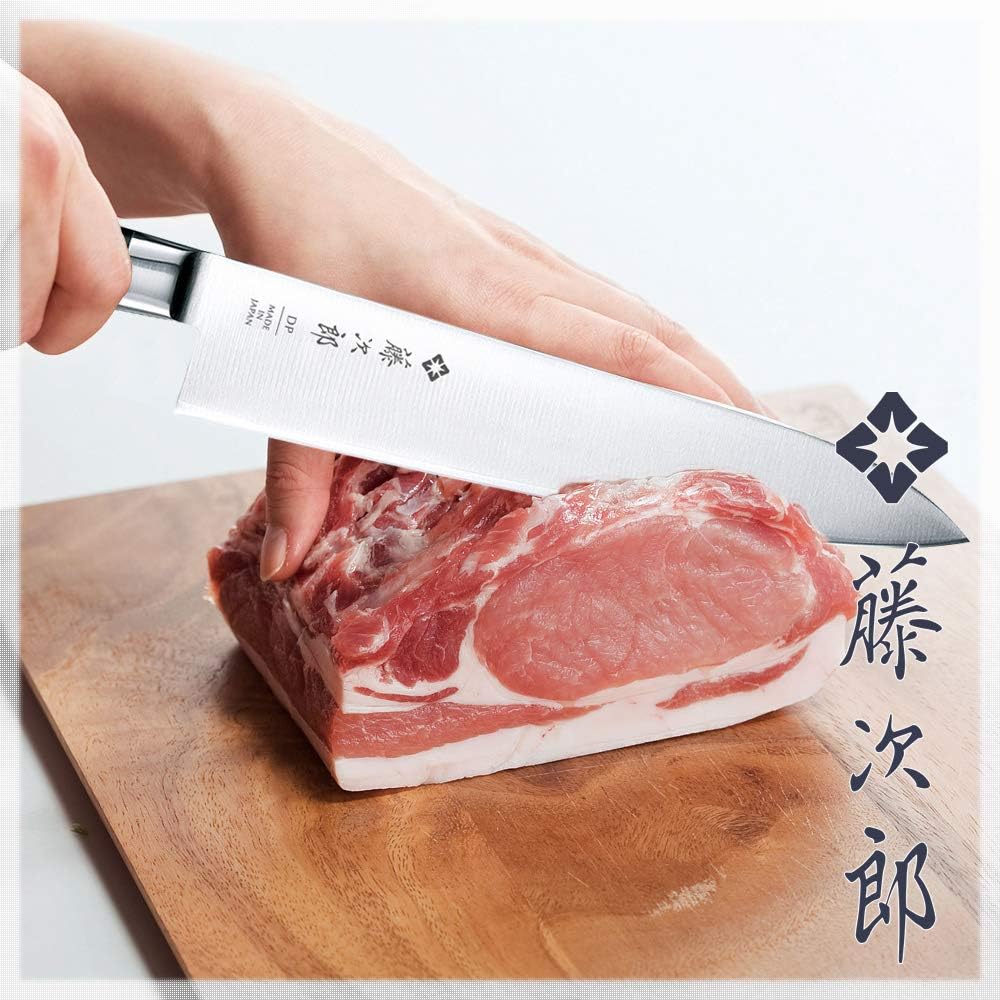
Tojiro is a Niigata Prefecture manufacturer that has been making professional-grade knives since 1955. Their DP (Dragon Power) line is the knife the professional kitchen community points to when someone says, “What’s the most knife for the least money?” The DP gyuto uses a VG-10 stainless steel core — a high-carbon stainless alloy developed in Japan that holds a sharp edge without demanding the obsessive care of carbon steel — clad in a softer stainless outer layer. The handle is a Western-style bolstered grip, which makes it immediately familiar if you’re coming from a European knife. Knife Planet’s review of the Tojiro DP Gyuto notes that the factory edge out of the box is competitive with knives costing twice as much, and Serious Eats’ “The Best Chef’s Knives” guide has consistently listed it as a top pick for cooks who want serious performance without serious risk.
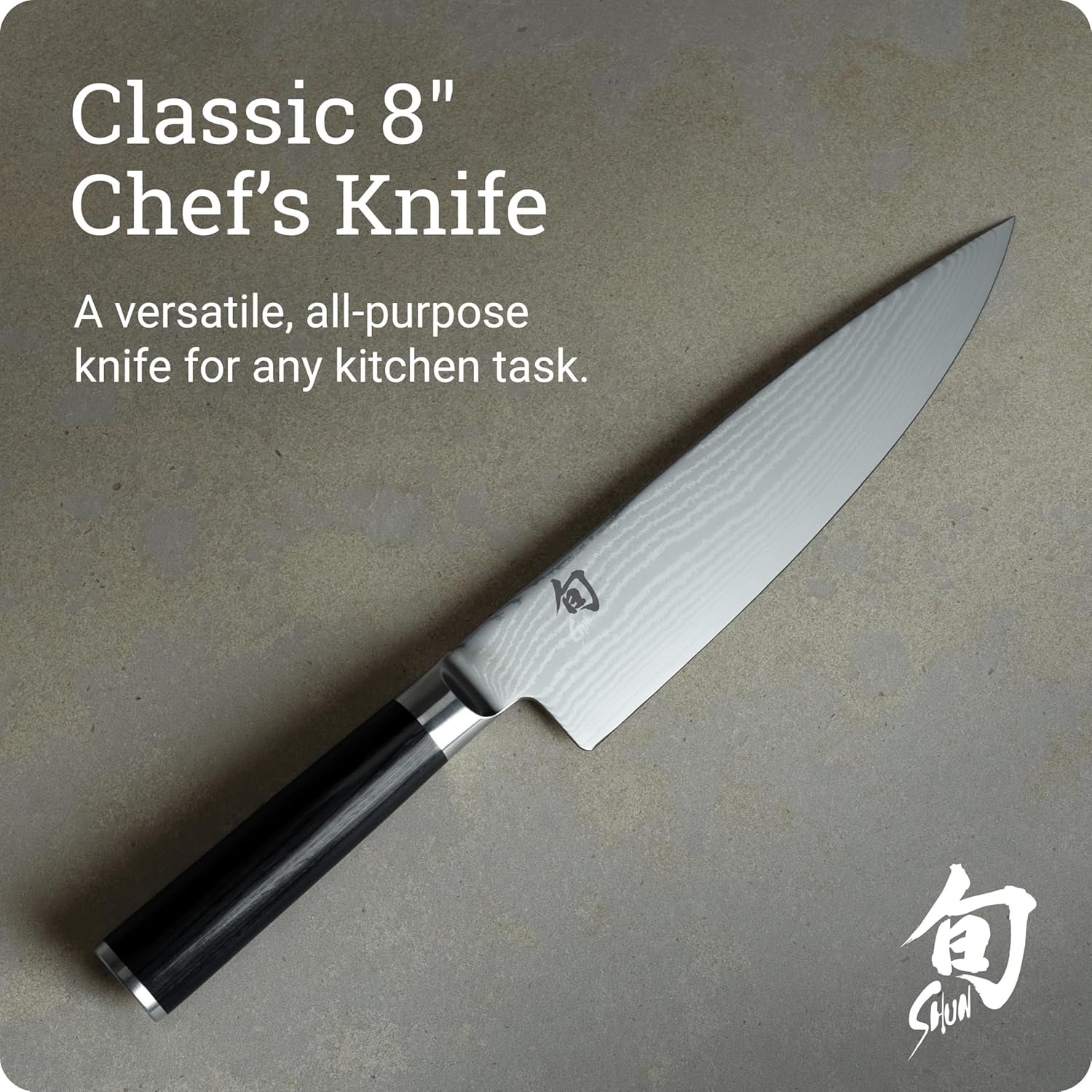
Shun is a brand under KAI Corporation, manufactured in Seki City — Japan’s historic blade-making center — and positioned squarely at the premium gift and culinary enthusiast market in the United States. Their Premier and Classic lines feature a Damascus-patterned blade: dozens of alternating steel layers folded and welded around a VG-MAX or SG2 core, then acid-etched to reveal the pattern. That pattern is partly functional (air pockets between food and blade can reduce sticking) but largely aesthetic. Wirecutter’s “The Best Chef’s Knife” review and Cook’s Illustrated’s Japanese Chef’s Knives equipment review both acknowledge Shun’s fit and finish as exceptional for the price point, while noting that the beauty of the blade can occasionally overshadow the conversation about whether it performs better than less photogenic rivals.
Yoshihiro occupies a different category entirely. The Yoshihiro Cutlery brand imports knives forged by individual smiths — often in Sakai, the city outside Osaka that has supplied Japan’s professional kitchens for over 600 years. Their entry-level lines use stainless-clad VG-10 similar to Tojiro, but the brand is best known for its honyaki (hon-YAH-ki) knives: single-metal, differentially hardened blades made using the same water-quenching technique applied to samurai swords. Those pieces sit at $600–$1,200 and above. What you’re buying is documented craft lineage — each knife carries the smith’s signature — not just a production run. Saveur’s “A Guide to Japanese Kitchen Knives” draws precisely this distinction between production-house knives (consistent, excellent, mass-produced) and smithy knives (variable, potentially extraordinary, deeply personal).
Three Knives, Three Buyers: The Honest Comparison
The Budget-Focused Cook: Tojiro DP Gyuto
The Tojiro DP is our answer for anyone coming from a Western knife who wants a reliable, no-drama upgrade. It handles like a familiar chef’s knife but cuts noticeably cleaner — especially on herbs, fish, and soft vegetables. The Western handle and full bolster mean you hold it the same way you always have, so there is no relearning period. At $80–$130, a bad sharpening session doesn’t cost you a night’s sleep. Serious Eats’ “The Best Chef’s Knives” guide describes this price tier as a rare case where “entry-level” is not a compromise, and Knife Planet’s Tojiro DP Gyuto review confirms that the out-of-box performance matches or exceeds knives at twice the cost.
One honest weakness: Multiple long-run reviewers note that the synthetic wood handle can feel slightly underwhelming relative to the blade quality, and the bolster shape makes it harder to sharpen the full heel of the edge without specialized technique. For most cooks this is irrelevant; for precision sharpeners, it is worth knowing before you buy.
Tojiro
$122.00
In stock on Amazon
Check price on AmazonThe Mid-Range Cook Who Wants to Own One Knife for Life: Shun Premier Gyuto
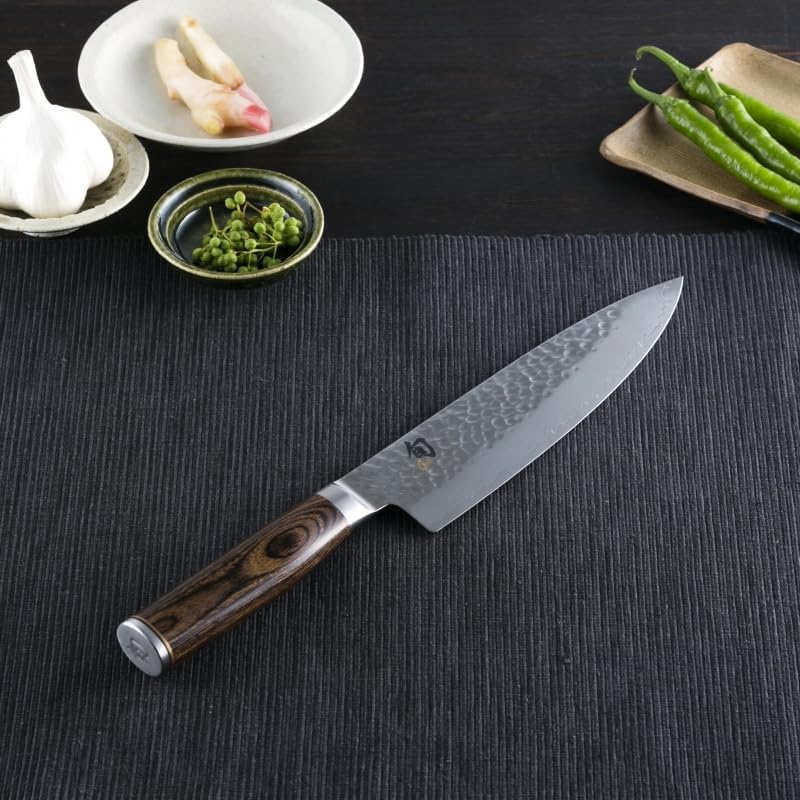
The Shun Premier at $200–$350 earns its price. The Damascus pattern is not purely decorative — SG2 powder-metallurgy steel (also labeled R2) is measurably harder than standard VG-10 and holds an edge longer under real daily-use conditions. Cook’s Illustrated’s Japanese Chef’s Knives equipment review notes that the hammered tsuchime (TSOO-chi-meh) finish on the Premier line genuinely reduces food sticking in daily prep work. Wirecutter’s “The Best Chef’s Knife” review highlights Shun’s quality control as exceptionally consistent, which matters when you are buying without handling the knife in person.
This is also the right answer when a knife is a meaningful gift. Shun’s packaging and presentation are clearly designed with that purchase occasion in mind, and the blade is genuinely beautiful on a magnetic strip. The performance and longevity justify the price; the aesthetic makes it a pleasure to own.
One honest weakness: Wirecutter’s testing notes that some Shun models are ground to a slightly more obtuse angle than competitors at the same price point, which can mean the blade benefits from a professional thinning session after several years of home sharpening. Factor in an occasional professional sharpen if you are not thinning blades yourself.
Shun
$159.00
In stock on Amazon
Check price on AmazonThe Committed Cook Ready to Learn Japanese Technique: Yoshihiro Gyuto
Yoshihiro’s line splits into two distinct conversations depending on your budget and your discipline.
The Yoshihiro VG-10 Clad wa-gyuto ($120–$220) is the right stepping stone for a cook ready to commit to whetstone sharpening and traditional Japanese handle technique. The wa (wah) handle — the lightweight octagonal or D-shaped handle traditional to Japanese knives — shifts the knife’s balance forward toward the blade, which rewards a pinch grip and precise wrist work. Owners consistently report that once the technique clicks, it feels faster and less fatiguing than a bolstered Western grip for long prep sessions. The tradeoff: wa handles require more intentional care (no prolonged soaking, occasional light oiling of the wood), and the geometry of the blade rewards skill — meaning you need to be sharpening on whetstones to get full value.
The Yoshihiro Honyaki ($600–$1,200+) is a different object entirely. These are single-metal, differentially hardened carbon steel blades — White #1 or Blue #2 steel at HRC 63–65 — made using the water-quenching technique also applied to traditional Japanese swords. Each knife carries the forging smith’s signature. Saveur’s “A Guide to Japanese Kitchen Knives” describes this category as “deeply personal” in a way that production knives cannot be. Owners who maintain the discipline required — distilled-water wipe-downs mid-prep, careful drying after every use, periodic light oiling — describe the cutting experience as unlike anything available in stainless steel. Food & Wine’s “Best Japanese Knives” roundup situates honyaki blades as aspirational tools for cooks who treat their knives as craft instruments rather than equipment.
Before considering the honyaki, ask one honest question: are you sharpening your current knife on Japanese whetstones at least monthly? If the answer is no, the honyaki will disappoint before it impresses. Carbon steel at this hardness level chips if you hit a frozen spot or torque the blade laterally. It rewards expertise and punishes casual use.
One honest inconsistency: Because many Yoshihiro pieces involve individual smiths and hand-finishing, two knives with the same SKU can have subtly different grind profiles. Aggregated buyer reviews suggest this variance is mostly positive — some knives punch above their specification — but you cannot predict your experience the way you can with Shun’s factory consistency.
Shun
$219.95
In stock on Amazon
Check price on AmazonThe Numbers at a Glance
| Brand / Line | Steel | Hardness (HRC) | Price Range | Best For |
|---|---|---|---|---|
| Tojiro DP Gyuto | VG-10 clad | ~60 | $80–$130 | First serious Japanese knife, Western grip |
| Shun Premier Gyuto | SG2 / VG-MAX Damascus | 60–61 | $200–$350 | Long-term ownership, gifts, daily excellence |
| Yoshihiro VG-10 Clad | VG-10 clad | ~60 | $120–$220 | Learning wa-handle technique, whetstone commitment |
| Yoshihiro Honyaki | White #1 or Blue #2 carbon | 63–65 | $600–$1,200+ | Expert-level use, provenance, craft collecting |
Steel specifications and hardness ratings per manufacturer published specifications, cross-referenced against the brand coverage in Serious Eats’ “The Best Chef’s Knives” guide and Food & Wine’s “Best Japanese Knives” roundup.
The Decision Rule, Reduced to Its Simplest Form
The gyuto is not a lifetime commitment to a single brand — many serious cooks end up with a Tojiro for daily work and a honyaki for special prep sessions, treating the two as different tools for different modes. But the next knife you buy should match where you are now, not where you hope to be.
- $80–$130, Western grip, first serious Japanese knife: Tojiro DP Gyuto. Full stop.
- $200–$350, want one excellent knife for life, or giving as a meaningful gift: Shun Premier Gyuto. The performance justifies the price; the aesthetic earns its place on the counter.
- $120–$220, ready to commit to whetstone sharpening and wa-handle technique: Yoshihiro VG-10 Clad wa-gyuto. The entry point into traditional Japanese knife culture.
- $600–$1,200+, already sharpening monthly, drawn to provenance as much as performance: Yoshihiro Honyaki. A knife with a smith’s name and a story, not just a product.
Buy the knife your current skills will let you fully use. That is the one you will love.