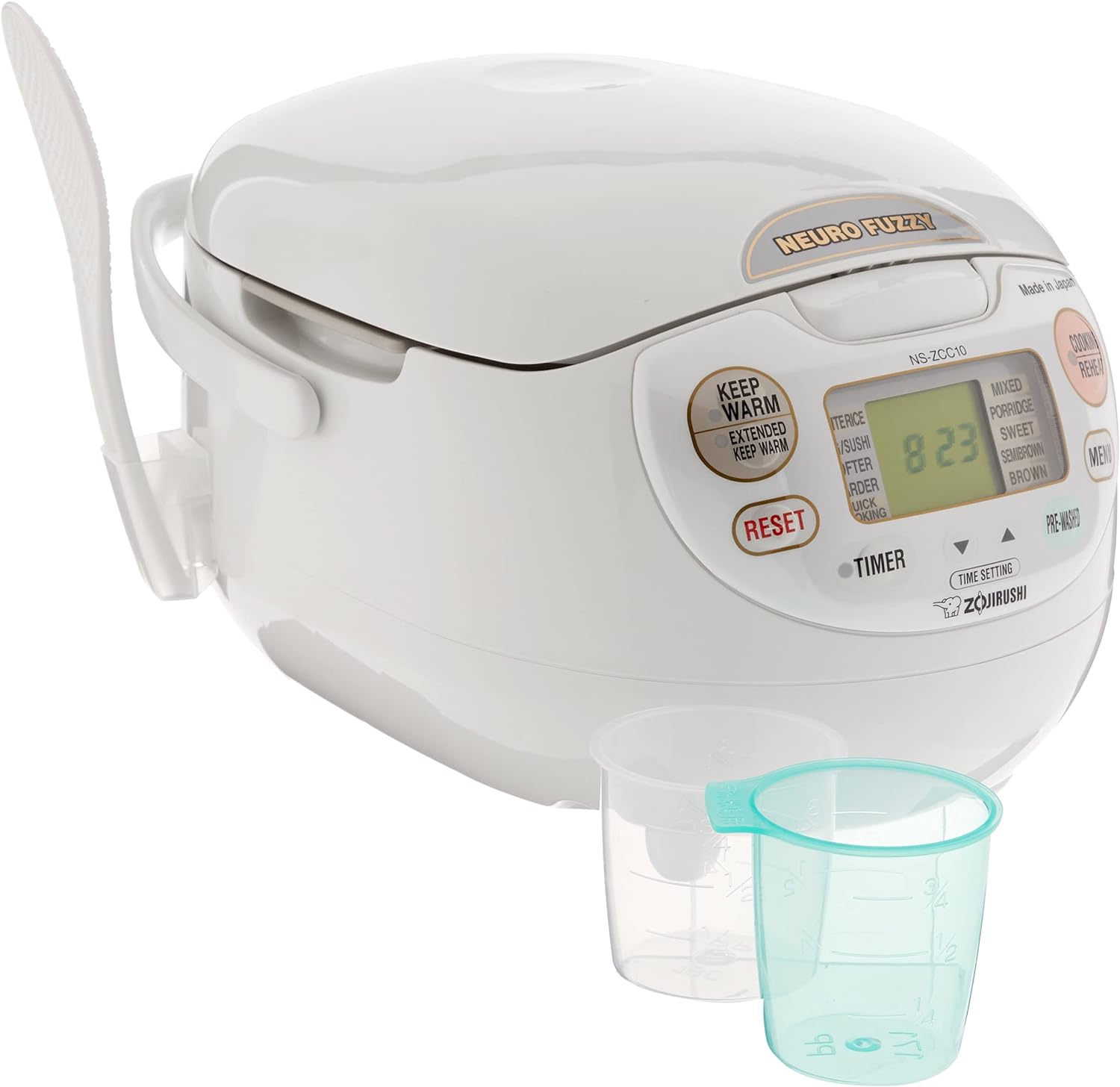
If you’ve ever wondered why serious Japanese home cooks tend to own three or four vessels that all technically cook rice — and why each one costs more than the last — you’re already asking the right question. Japanese cookware isn’t redundant; it’s layered. Each tier in the lineup does something the previous one can’t, and understanding what and why is the difference between a smart upgrade and an expensive detour. This guide covers the three most talked-about rungs on that ladder: the electric rice cooker (a countertop appliance that uses induction heat and sensors to automate perfect rice), the donabe (a Japanese clay pot used directly on the stovetop, traditionally for rice, soups, and hot-pot meals), and the Vermicular (a precision-cast Japanese iron pot that bridges the gap between Western Dutch ovens and Japanese cooking philosophy). If you’re staring at a mid-range rice cooker and wondering what’s actually worth upgrading to next, read on.
What Each Vessel Actually Does — and Doesn’t Do
Before you can make a smart call, you need an honest picture of each category’s ceiling.
The Electric Rice Cooker: Your Non-Negotiable Foundation
An entry-level fuzzy-logic rice cooker — Zojirushi’s NS-TSC10 sits at roughly $120–$150, the NS-ZCC10 lands around $180–$200 — does one thing with remarkable consistency: it cooks white rice correctly, every time, without you watching it. The “fuzzy logic” just means the appliance has a microchip that adjusts temperature and timing based on what it senses, rather than running a fixed program. Wirecutter’s rice cooker guide consistently names Zojirushi as its benchmark for precisely this reliability.
What a rice cooker doesn’t do is add anything to the eating experience beyond correctness. The steam cycle produces fluffy, separated grains, but reviewers note that the crust, fragrance, and layered starch texture that Japanese home cooks prize — what gets called oこげ (okoge, the lightly toasted bottom layer) in its deliberate form — is largely absent. You’re getting reproducibility, not revelation.
The honest ceiling: A high-end rice cooker like the Zojirushi NW-JEC10 (roughly $350–$450, induction heating) does produce noticeably better rice than the entry models. Serious Eats’ rice cooker coverage describes the induction models as generating a more even, thorough heat. But even the top-tier electric cooker is optimizing for consistency, not for craft.
The Donabe: Where Cooking Becomes a Small Ritual
A donabe is an unglazed or partially glazed clay pot fired in one of Japan’s traditional kiln regions — most famously Iga (Iga-yaki) or Banko (Banko-yaki). The clay is porous and retains heat differently from metal: it absorbs moisture, breathes slightly, and radiates a gentler, more diffuse heat than a stainless or cast-iron vessel.
Toiro Life, the Los Angeles-based Japanese cookware importer widely cited by food writers for donabe guidance, describes Iga-ware clay as containing fossilized organic material that creates microscopic air pockets — those pockets are what give Iga donabe their distinctive heat retention profile. When you cook rice in a well-seasoned donabe on a gas burner, you get something the electric cooker can’t replicate: a gentle steam from the clay itself, a lightly crisp bottom layer if you want it, and — honestly — a fragrance that fills the kitchen.
Saveur’s coverage of donabe cooking frames it correctly: the donabe isn’t faster or more precise than an electric cooker. It’s more present. You’re watching the steam, adjusting the flame, listening for the simmer. That’s either a feature or a friction point, depending on your weeknight reality.
Price range: Entry-level Nagatani-en donabe run $80–$120. Properly proportioned Iga-ware pieces (the Kamado-san double-lid design is the most-reviewed) land around $180–$280 depending on size. Limited-edition or artist-thrown pieces climb past $400.
The honest ceiling: A donabe is a stovetop-only vessel with real fragility constraints. It cannot go in an oven, cannot handle sudden temperature changes (never put a cold donabe on high heat), and requires curing before first use. Reviewers on multiple platforms note that the learning curve is real but short — most people nail donabe rice within two or three sessions.
The Vermicular: Engineering Meets Craft Heritage
The Vermicular Musui-Kamado is a different animal entirely. Made in Nagoya by Aichi Dobby, a precision engineering firm founded in 1936, it’s a Japanese cast-iron pot (the musui, meaning “waterless pot”) paired with an induction heating base (the kamado, meaning hearth or stove). The cast-iron lid is machined to a tolerance of 1/100 millimeter — Japan Times reporting on Vermicular cited this spec as central to the company’s identity and patent claims — which creates a near-hermetic seal that traps virtually all moisture and aromatics inside the pot.
Food & Wine’s coverage of the Musui-Kamado describes the cooking result as something between a pressure cooker and a traditional braising pot: vegetables cook in their own liquid, rice develops a bottom crust (the socarrat equivalent, if you’re coming from paella culture) with zero added water in some preparations, and meats braise without losing aromatics to evaporation.
The Vermicular is also the only vessel in this lineup that functions equally well as a stovetop pot, an oven vessel, and a standalone smart appliance (when paired with the kamado base). It’s the all-rounder.
Price range: The Musui-Kamado system retails at approximately $600 for the base configuration. The Musui pot alone (for use on existing induction or gas) is sold separately at lower price points in some markets.
By the Numbers
| Vessel | Entry Price | Ceiling Price | Primary Use Case | Oven Safe? | Requires Attention? |
|---|---|---|---|---|---|
| Zojirushi rice cooker (fuzzy logic) | ~$120 | ~$450 | Set-and-forget white rice | No | Minimal |
| Iga-ware donabe (Nagatani-en) | ~$90 | ~$280+ | Stovetop rice, hot pot, soups | No | Yes — active |
| Vermicular Musui-Kamado | ~$600 | ~$650+ | Rice, braises, vegetables, multi-use | Yes (pot only) | Moderate |
The Real Tradeoffs: What Nobody Tells You Before You Upgrade
Donabe vs. Rice Cooker: It’s a Lifestyle Question, Not a Quality Question
The donabe doesn’t make better rice than a premium induction rice cooker in any measurable output sense — both produce properly cooked, properly textured grains. What the donabe produces is a different rice experience: more aromatic, with textural variation from top to bottom of the pot, and with an engagement factor that some cooks find meditative and others find inconvenient.
Toiro Life’s care guides are emphatic on this point: the donabe rewards cooks who are already at the stove — making a full meal, not just queuing up a side dish. If your rice cooker currently lives on the counter and runs while you’re doing other things, the donabe isn’t a straight upgrade. It’s a lateral move that requires you to be present.
The decision rule: If you cook rice as part of an active cooking session two or more nights a week and you’re interested in the ritual of it — the donabe is worth every dollar at the $180–$280 price point. If rice is infrastructure that needs to be ready when you walk in the door, the induction rice cooker is the honest answer.
Donabe vs. Vermicular: Different Problems, Same Aesthetic
These two pots share an aesthetic lineage — both are rooted in Japanese craft, both produce remarkable rice — but they solve different problems.
The donabe is a stovetop clay vessel designed for Japanese-style dishes: rice, nabe (hot pot), kayu (rice porridge), miso-based soups. It’s category-specific. The Vermicular is a precision cast-iron multi-use pot that happens to excel at rice but is equally capable of braised short ribs, ratatouille, or bread.
If your cooking is predominantly Japanese-leaning — you’re building a Japanese kitchen and want tools that connect to that tradition — the donabe is the culturally coherent choice. It has provenance, craft heritage, and a tactile identity that matters if those things matter to you.
If you’re a hybrid cook who wants one exceptional pot that earns its counter space across cuisines, the Vermicular’s case is strong. Japan Times reporting describes Vermicular as deliberately positioning itself as a bridge between Japanese manufacturing precision and global culinary ambition — and that framing is accurate to how most reviewers experience it.
The decision rule: If your cooking is 70%+ Japanese-style dishes and you value the clay-pot tradition, buy the donabe at $180–$280 and use the savings elsewhere (a better knife is never the wrong call). If you want one premium vessel that handles everything from ochazuke to Sunday braises, the Vermicular at $600 justifies the step-up.
The Case for Owning All Three (And It’s Not Crazy)
Here’s the thing that experienced Japanese kitchen builders figure out quickly: these three vessels don’t compete. They operate on different timelines and for different purposes.
- The rice cooker handles Tuesday night when you’re not cooking — it’s running while you handle everything else.
- The donabe is Saturday morning okayu (rice porridge), Sunday nabe in winter, the vessel you use when the cooking is the point.
- The Vermicular is the serious kitchen workhorse — braises, roasts, slow vegetables, and showpiece rice when you want the socarrat crust.
Across the enthusiast community, the pattern reviewers describe isn’t replacement but rotation. None of these vessels makes the others obsolete. The rice cooker total cost across a lifetime of weekly use is genuinely low; the donabe is an heirloom piece that lasts decades with reasonable care; the Vermicular is a generational investment.
If X, Then Y: Your Decision Framework
If you don’t own a rice cooker yet: Start with a Zojirushi fuzzy-logic model in the $120–$180 range. Wirecutter and Serious Eats both converge on this as the rational entry point. Do not skip this step — the rice cooker is your baseline, not your limitation.
If you have a rice cooker and want more from your rice: Buy the Nagatani-en Kamado-san donabe in the 2- or 3-cup size. Budget $180–$230. Give yourself three sessions to calibrate the heat. Reviewers consistently report that the learning curve is shorter than expected and the results are genuinely different from what an electric cooker produces.
If you have a donabe and want a single pot that expands your cooking without leaving Japanese craft behind: The Vermicular Musui-Kamado at ~$600 is the honest answer. It doesn’t replace the donabe — it extends your range.
If you’re buying as a gift: A properly sized Iga-ware donabe in the $180–$250 range is the gift that lands. It has provenance (Iga-yaki is one of Japan’s six ancient kiln traditions), it’s visually striking, and it produces results that make the recipient feel like they discovered something. The Vermicular is a better gift for someone who has already asked for it — its specificity requires buy-in.
The upgrade path from rice cooker to donabe to Vermicular isn’t about spending more for its own sake. It’s about knowing exactly what problem each vessel solves — and buying the one that solves your problem next.